
Self-Exclusion in Online Casinos: How It Works and What to Expect in 2025
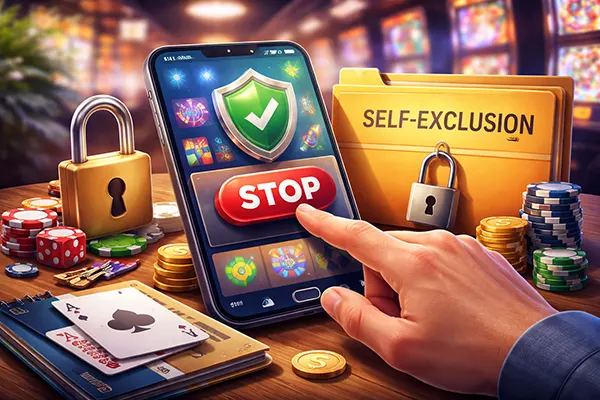
Self-exclusion is one of the strongest player protection tools available in online gambling. It allows you to block yourself from accessing gambling accounts for a fixed period, giving you space to regain control if gambling has started to feel harmful or difficult to manage. In 2025, reputable licensed operators and regulators treat self-exclusion as a core responsible gambling requirement, not an optional feature, and the process has become more structured across many jurisdictions.
What Self-Exclusion Means in Practice
Self-exclusion is a formal request you make to stop yourself from gambling with a particular operator, or within a regulated scheme that covers multiple operators. Once active, you should be prevented from logging in, depositing, placing bets, or receiving marketing communication. The purpose is simple: to remove easy access during a vulnerable period and reduce triggers that could lead to impulsive play.
In 2025, most licensed online casinos offer self-exclusion through the account settings area, through customer support, or via regulator-backed tools. The key difference between a basic “time-out” and full self-exclusion is the level of restriction. A short time-out can sometimes be reversed quickly, while self-exclusion is designed to be firm: it typically cannot be cancelled early, and it applies for a set minimum duration depending on the jurisdiction and the operator’s rules.
It is also important to understand what self-exclusion does not automatically do. It does not prevent you from gambling with other operators unless you register with a multi-operator exclusion scheme (where available). It also does not block gambling websites at device level. This is why many responsible gambling advisers recommend combining self-exclusion with additional safeguards such as payment blocks and device blocking software.
Key Differences: Operator-Based Exclusion vs National Schemes
Operator-based self-exclusion blocks access only to the specific brand you request it from. This can be effective if you mainly use one casino, but it leaves gaps if you have accounts elsewhere. In 2025, most reputable brands still provide this option because it is widely required by licensing rules, and it can be activated quickly.
National or multi-operator schemes, where they exist, extend protection by covering many licensed operators within a jurisdiction. For example, the UK continues to rely on a centralised scheme that blocks access to participating licensed operators, making it harder to switch from one site to another during an exclusion period. Other markets have similar solutions, while some countries still rely mostly on individual operator controls.
The practical outcome is that your best choice depends on where you gamble and which licences the operators hold. If you gamble across multiple brands within one regulated market, a national scheme is often more effective. If such a scheme is not available in your country, you may need to repeat self-exclusion requests with each operator you use, and add technical blocking tools for stronger coverage.
How to Activate Self-Exclusion Step by Step
In most online casinos, you can start self-exclusion in one of three ways: through your account settings, by contacting customer support, or through an external exclusion register. The most straightforward method is usually inside your account, where responsible gambling options are listed alongside deposit limits and session reminders. You will normally be asked to choose a duration and confirm that you understand the restriction cannot be lifted early.
During activation, the casino may ask for identity verification, especially if you request the exclusion through live chat or email. This is not to make the process difficult; it is to prevent someone else from excluding your account maliciously. In 2025, identity checks commonly rely on standard KYC procedures: matching your personal details, confirming contact information, and verifying documents if required.
After self-exclusion is confirmed, you should receive written confirmation by email. Keep this message. It can be useful if you need to prove the date the exclusion started or raise a complaint later. If you still have funds in your account, the operator should explain how withdrawals work during exclusion. Many regulators require that players can withdraw remaining balances, though the exact process varies depending on the operator and local rules.
What Happens to Your Account, Balance, and Marketing Messages
Once self-exclusion is active, your access should be restricted immediately. In practical terms, you may be logged out, your password reset may be blocked, and deposits should be disabled. Some operators also block games and cashier access even if you can reach the login screen, creating multiple barriers against relapse.
Marketing communication is another critical point. A properly implemented self-exclusion should remove you from promotional email lists, SMS marketing, and push notifications. In 2025, many regulators treat this as mandatory. If you continue to receive marketing after self-excluding, that is a red flag and can be reported to the operator’s compliance team or the licensing authority.
Regarding your balance, most reputable casinos allow withdrawal of remaining funds after basic identity verification. However, timelines can differ. Some operators process withdrawals as normal, while others may apply additional checks. If you suspect delays are being used unfairly, you should request a clear written explanation and, where available, use the regulator’s dispute process or an alternative dispute resolution service.
Limits, Loopholes, and Extra Protection Tools to Use in 2025
Self-exclusion is powerful, but it is not magic. The biggest limitation is coverage. If your self-exclusion is only with one operator, you can still register elsewhere. Even with a national scheme, coverage might not include offshore casinos that operate without local licensing. In 2025, many responsible gambling organisations stress the importance of choosing operators that are properly licensed in your jurisdiction, because enforcement is far stronger there.
Another limitation is the human factor. People sometimes self-exclude during a crisis but do not build longer-term support around that decision. If you recognise patterns of chasing losses, gambling to escape stress, or hiding spending, self-exclusion should be treated as one part of a wider plan. Many players benefit from combining it with budgeting tools, counselling, or support groups, especially when gambling has become a coping mechanism.
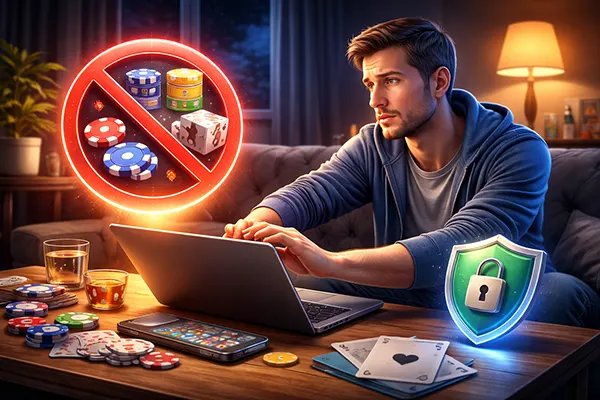
The strongest approach in 2025 is layered protection. Alongside self-exclusion, you can use bank gambling blocks (available with many UK and EU banks), prepaid card restrictions, and device-level blocking software. These steps reduce the chance of quick access, especially late at night or during emotional triggers, when decision-making tends to be weaker.
When to Seek Support and How to Choose the Right Next Step
If you are considering self-exclusion, it often means your gambling no longer feels fully under control. That does not automatically mean severe addiction, but it is a signal worth taking seriously. In 2025, many gamblers use self-exclusion early, before the situation escalates, and this early action often prevents debt, relationship damage, and worsening mental health.
Support options vary by country, but the principle is consistent: you do not have to handle it alone. Speaking to a GP, a specialist gambling support service, or a qualified therapist can help you understand the drivers behind the behaviour and build a realistic plan to change it. If you are in the UK, organisations such as GamCare and the National Gambling Helpline remain widely referenced routes for confidential advice. In other regions, national health services and licensed treatment providers often offer similar support.
If you are unsure which option fits your situation, start with the least complicated immediate step: self-exclude from the operator(s) you use most, activate bank gambling blocks if available, and install a blocking tool on the devices you typically use. Then, set a simple follow-up goal: speak to a support service or a trusted person within the next week. Self-exclusion works best when it is paired with a clear next step, not used as a one-off emergency switch.